


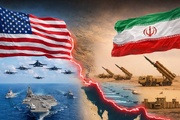
In the five weeks that have passed since the start of the joint US-Israel attack on Iran, one fact has imposed itself upon analysts more than any other: the world is confronted with a type of resistance that fits neither within classical security models nor can it be understood within the common frameworks of Western political science. What is happening in Iran is the emergence of a "socio-civilizational phenomenon" rooted in history, culture, and collective memory. For a Western audience, perhaps the first question is why so many predictions about the rapid collapse of Iran's internal cohesion turned out to be incorrect? Why, contrary to expectation, did internal rifts not only fail to intensify, but rather a kind of convergence and unison formed across different levels of society? The answer to this question is the key to understanding "resistance, Iranian-style."
Resistance; Beyond the Organization
In many Western analyses, resistance is often defined as an organizational structure; something like an identifiable group, network, or institution that can be targeted, weakened, or eliminated. This perspective is rooted in the experiences of the 20th century, from classical wars to confronting guerrilla and paramilitary groups.
But what is observed in Iran is fundamentally different from this definition. Resistance here is not an organization, but rather an "inclination"; an inclination that becomes activated at the moment of threat and manifests itself in diverse forms. From the voluntary presence of people on various scenes to informal and spontaneous reactions, all indicate that we are dealing with a fluid, decentralized phenomenon. An English sociologist, David Miller, has described this point well, saying that videos of Iranian villagers confronting advanced helicopters with simple weapons are not merely emotional images; rather, they are a sign of this reality that resistance, before being a structure, is a "human response" to the feeling of occupation and threat.
The West's Strategic Error
One of the greatest miscalculations in confronting Iran has been that Iranian society has been considered as an extension of formal structures. In other words, the prevailing assumption has been that if political or military structures are weakened, society will automatically collapse or at least become destabilized. This is the same pattern that has been experienced in some other countries and has somehow become a "self-evident assumption" in the minds of Western policymakers. But Iran is an exception to this rule, and this exceptional nature is not accidental. In Iran, the relationship between state and society is not merely an administrative or political one; rather, on many levels, it is intertwined with concepts of identity, history, and even ethics. In such a context, an external threat easily transforms into a "national issue," not merely a political crisis. For this reason, any attempt to weaken Iran through military pressure, if not accompanied by a correct understanding of these social bonds, can have the opposite effect; that is, instead of creating rifts, it can lead to the strengthening of cohesion.
Historical Memory; The Hidden Engine of Resistance
For a deeper understanding of this phenomenon, one must pay attention to a key factor: historical memory. Iran is a country that has numerous experiences of confronting foreign powers in its collective memory. These experiences have not merely remained in history books; they have become part of the community's cultural identity. In such a climate, concepts like "occupation," "foreign intervention," or "defense of the homeland" carry very heavy semantic weight. These concepts function not as slogans, but as part of the people's daily perception. For this reason, when an external threat materializes, society's reaction is not solely based on momentary analyses, but is formed on a bedrock of historical experiences and shared narratives. This is precisely what is overlooked in many Western analyses.
A Human Network, Not a Military Structure
Another characteristic of resistance in Iran is its networked and dispersed nature. Contrary to common belief, this resistance is not necessarily directed by a single command center, but rather operates in the form of a vast human network. In this network, each individual can play a role in their own position. That role may be military, social, media-related, or even merely symbolic. What matters is the existence of a feeling of participation in a "collective project." This type of resistance, due to its decentralization, is far more difficult to contain than classical models. Because eliminating one part of it does not mean the destruction of the entire system. On the contrary, in many cases, external pressure can lead to the activation of new parts of this network.
The Mistake in Reading Iranian Society
A significant part of the misunderstandings about Iran relates to the way its society is read. In many cases, Western analysts, relying on limited data or media impressions, present a one-dimensional image of Iranian society. This image often focuses on rifts, dissatisfactions, or internal differences, which are indeed part of the reality. But the problem begins when these elements are considered the "determining factor," and other components are ignored. Whereas experience has shown that Iranian society can have diversity and even internal contradictions under normal circumstances, but when confronted with an external threat, it quickly enters another phase of collective behavior, a phase in which priorities change and a kind of solidarity forms.
Resistance as a Common Language
One of the lesser-noted aspects is the role of resistance as a "common language" in Iranian society. This concept is not merely a political idea, but rather exists, in a way, in public culture, literature, art, and even daily life. In such a climate, resistance is considered not only a reaction, but also a value; a value that can bring together people with different viewpoints at a single point. This characteristic means that even individuals who, under normal circumstances, might have criticisms of the domestic situation, when facing an external threat, act within the framework of this same common language.
Conclusion
What is observed today in Iran is a manifestation of a deeper pattern; a pattern in which society acts as an active, not passive, actor. For many in the West, this reality remains unknown or at least underestimated. But the continuation of this trend may show that without understanding this pattern, any analysis or decision-making regarding Iran will carry a high risk of error. Resistance, Iranian-style, is not something that can be contained merely by military tools or common analytical models. It is a human phenomenon; deep-rooted, dynamic, and in many cases, unpredictable. Perhaps the most important point is precisely this: to understand it, one must go beyond familiar frameworks. Ignoring these realities could have serious consequences for policymaking. If Western decision-makers continue to rely on the assumption that military or economic pressure can quickly destroy Iran's internal cohesion, there is a risk of repeating past errors. Conversely, a more precise understanding of the nature of resistance in Iran could lead to the formation of more realistic approaches.
MNA







Your Comment